Prevention, Leadership & Inspiration with Dr. Payal Kohli
Quick AI Recap
The Kentucky ACC Women in Cardiology held a virtual coffee meeting featuring Dr. Payal Kohli, who presented on "From Calcium Score to Navigating Heart Health and Leadership." Dr. Kohli discussed preventive cardiology strategies, including the use of coronary CT angiograms and calcium scores for risk assessment, new lipid management guidelines emphasizing "lower is better for longer and faster," and the importance of early intervention including oral PCSK9 inhibitors for primary prevention. The presentation highlighted how Kentucky has one of the highest rates of deaths from cardiovascular disease in women, tied with Virginia, and emphasized the need for more preventive cardiology focus in the state. Following the presentation, several committee members stayed on to discuss planning future Women in Cardiology events, with participants sharing their backgrounds and expressing interest in various committee roles including student mentoring, community outreach, and educational initiatives.
AI Summary
Planning Committee Meeting Preparation
The meeting began with participants joining and addressing technical issues, including audio problems with Dialla's connection which were resolved. Michele welcomed attendees and mentioned that additional participants including Dr. Lizu, Marin Shetty, and Patricia would join the planning committee after the meeting. The group was waiting for more participants to join before starting the main discussion, with some members planning to step away briefly for calls or coffee.
Women's Cardiovascular Health Presentation
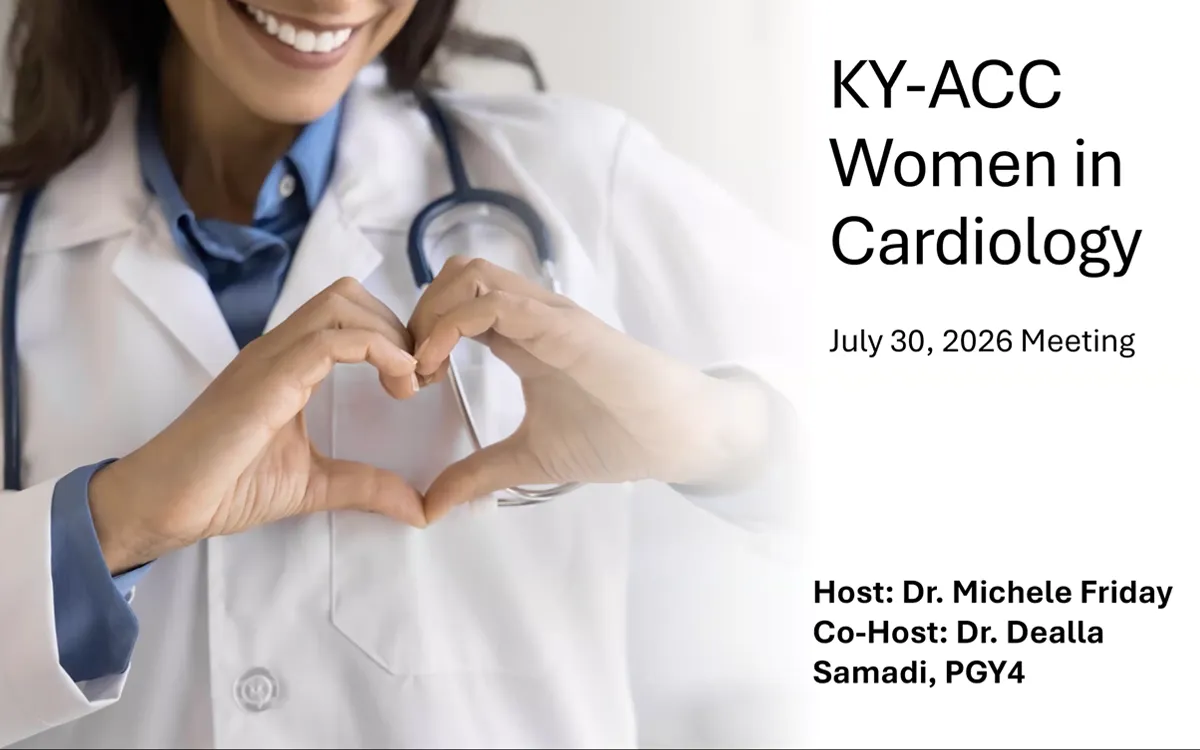
The meeting began with introductions and technical preparations for Dr. Payal Kohli's upcoming presentation on women's cardiovascular health. Michelle Friday, chair of KYACC Women in Cardiology, highlighted Kentucky's concerning statistics regarding women's heart disease deaths, noting the state has one of the highest rates nationally, particularly affecting young women aged 18-44. The meeting included discussions about logistics such as screen sharing and recording, with approximately 29 attendees expected, and concluded with Dr. Samadhi introducing the agenda and Dr. Kohli's background as a PGY-4 resident planning to specialize in pediatric cardiology.
Preventive Cardiology and CT Angiography
Dr. Payal Kohli presented on preventive cardiology and coronary CT angiography, explaining how calcium scores and CT angiograms can help identify and characterize plaque in asymptomatic patients. She discussed the evolution from using risk calculators alone to incorporating biomarkers, calcium scores, and now coronary CT angiography to assess both anatomy and physiology of coronary plaque. Dr. Kohli emphasized the importance of using these tools to stage atherosclerosis and guide treatment decisions, including medication titration based on plaque changes over time.
ASCVD Prevention Guidelines Update
The doctor discussed modern approaches to ASCVD prevention, emphasizing the importance of personalized medicine and moving away from population-based risk calculators. Key updates included the 2026 ACC/AHA dyslipidemia guidelines, which reintroduce specific LDL targets (less than 55 for very high risk patients) and recommend earlier initiation of statin therapy, including for younger adults with elevated LDL. The doctor highlighted new treatment options like oral PCSK9 inhibitor elicitide and the expanded use of PCSK9 inhibitors for primary prevention, along with the importance of monitoring ApoB as a secondary target beyond LDL control. The discussion also covered the use of coronary CT angiography for diagnosis and prognosis, and the concept of cardiovascular risk staging using the CKM framework, with plans to develop a "cardiovascular twin" digital tool for personalized prevention planning.
Preventive Cardiology Strategy Discussion
Dr. Kohli discussed strategies for increasing preventive cardiology focus in Kentucky, suggesting the creation of a fellowship or dedicated cardiometabolic track to attract early career clinicians. She emphasized the importance of systematic preventive care, recommending that clinicians spend the last two minutes of every visit evaluating prevention metrics like LDL and ApoB. Dr. Kohli agreed to share her presentation slides with the audience and expressed her commitment to preventive cardiology as a way to create meaningful impact and combat burnout in medicine.
Radiation Exposure and Cancer Screening
Dr. Kohli discussed the importance of reporting breast arterial calcifications (BACs) on mammograms and lung cancer CT scans for risk assessment. He emphasized tracking patients' lifetime radiation exposure and suggested that future advancements in CT technology may help reduce radiation doses. Dr. Kohli also shared his career journey, highlighting how he transitioned from anesthesia to internal medicine and eventually to private practice, encouraging others not to fear change as it leads to progress.
Career Development in Preventive Cardiology
Dr. Kohli shared his approach to career development in preventive cardiology, emphasizing the importance of variety, flexibility, and aligning personal interests with opportunities. He discussed how he transitioned into television work and advised others to be thoughtful and iterative in their career planning. The discussion also covered challenges with insurance coverage for calcium scores and strategies for engaging medical students and primary care physicians in preventive cardiology, including highlighting its scientific appeal and work-life balance benefits.
Women in Cardiology Planning Committee
The conversation ended with a discussion about forming a Women in Cardiology planning committee following a presentation by Dr. Cole. Michele Friday led introductions from committee members including Li, Mrin Shetty, Stephanie, Helen, and Dealla, who shared their backgrounds and interests in cardiovascular health. The group agreed to schedule a follow-up meeting in August to plan upcoming activities, including a scientific session in October and future WIC meetings, with committee members expressing interest in contributing to areas such as student mentoring, community outreach, and event planning.